



Creating an environment for care at home includes more than setting up a spare room or clearing clutter. The home’s layout and features should be adjusted to fit medical needs, daily routines, and safety requirements. At Rebekah Health Links, care at home services are structured to support these adjustments. Here are some things to know about making your home a comfortable and safe environment for care:
Assess the Home for Mobility and Accessibility
Start with a thorough walkthrough. To get the most accurate perspective, try moving through the house as if you are actively assisting someone with limited mobility. Look for the following:
Tight Spaces and Turns: Identify areas that feel cramped or where narrow turns might complicate movement for someone using a walker or wheelchair.
Tripping Hazards: Check for rugs with curled edges, loose cords, or small thresholds that interrupt a smooth walking surface.
Structural Obstacles: Look for sharp corners and door frames that are too narrow for easy passage.
Pathway Clearances: Note any furniture or decorative objects that physically block natural walking paths and may need to be rearranged.
Necessary Modifications: Evaluate where physical aids—such as grab bars in bathrooms or ramps at entryways—might be required for safety.
Pro Tip: If you aren’t sure where to start, Rebekah Health Links provides professional “care at home” evaluations. These assessments help identify potential hazards early, before they lead to unnecessary injuries or setbacks.
 Support Daily Routines Through Layout Choices
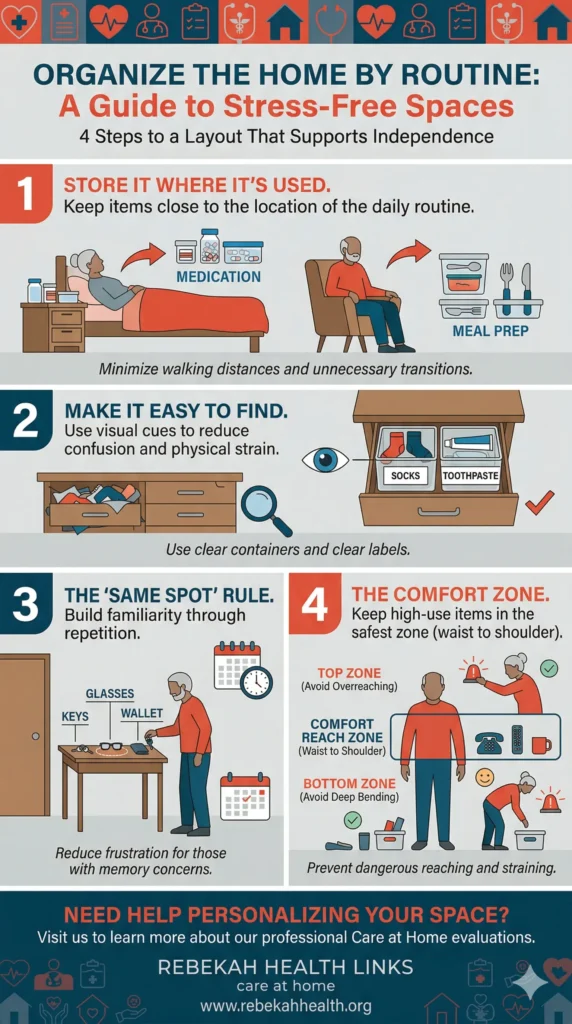
Daily habits should guide a home’s layout more effectively than a generic checklist. By observing how a loved one naturally moves through their day, you can influence where and how items are stored to maximize independence and safety.
Align Storage with Activity: Observe where tasks actually happen. If medications are taken in bed or meals are prepped while seated, store those items within arm’s reach of those specific locations.
Improve Visual Access: Use clear containers, open bins, or large-print labels on drawers. This makes key items visible and accessible without the physical strain of searching through cluttered spaces.
Establish “Same-Spot” Consistency: For individuals with memory issues, placing essential objects in the exact same spot every day helps build familiarity and reduces frustration.
Simplify Reach Zones: Ensure the most frequently used items are stored between waist and shoulder height to prevent unnecessary bending or reaching.
Refining Your Home Layout: If you aren’t sure how to best adapt a space for specific medical needs, our team offers professional care at home evaluations. We can help you create a supportive environment that prioritizes safety—feel free to contact us with any questions.
Improve Lighting and Reduce Surface Hazards
Lighting changes how a room functions. A single overhead bulb can cast glare or create shadows, making depth perception harder to judge. Layered lighting, such as overhead, task-specific, and motion-triggered sources, helps avoid those blind spots.
Stability underfoot is also significant. Smooth floors may be easy to clean, but can become hazardous. Adding non-slip mats, textured rugs, or tread strips in specific areas provides traction without requiring major alterations. In bathrooms, handrails or supports near sinks and tubs add an extra point of contact, especially during transfers. Small adjustments like these can reduce fall risk and support confident movement throughout the day.
Create Flexibility With Family and Care Teams
Multiple people may be involved in the care process, so the setup should not rely on any one person’s memory. Supplies should be stored in areas that are easily accessible to all caregivers, including family members, home aides, and others. Written instructions or visual cues can help keep the routine consistent without requiring reminders.
As needs shift, the space will likely need to change too. A setup that works after a hospital discharge might feel limiting six months later. Rebekah Health Links builds this kind of flexibility into its approach, adjusting services as the person’s mobility or care level changes. The home is not just a setting for care but part of the care plan.
Adapt the Home for Long-Term Care at Home
Caring for someone at home requires refining the space to meet the needs of the people living there. Rebekah Health Links offers solutions that make those adjustments smoother, with a focus on sustainability, comfort, and long-term support. Ready to make your home safer? Schedule a professional home care evaluation with Rebekah Health Links today.